Link to:
Clerics | Photos & Coordinates | Sources
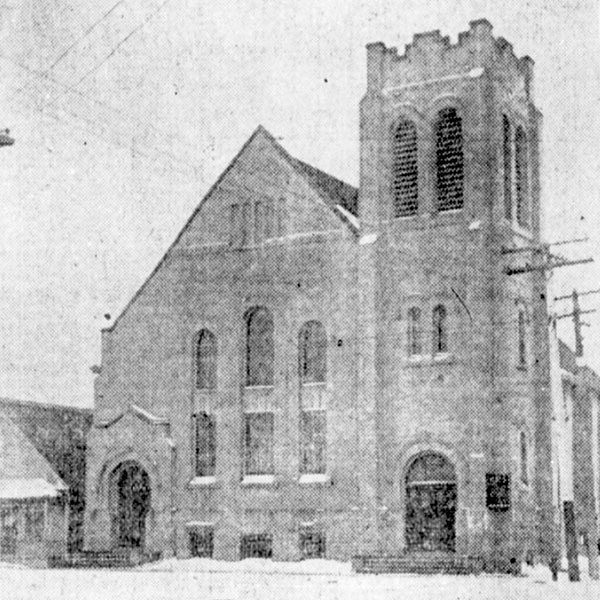
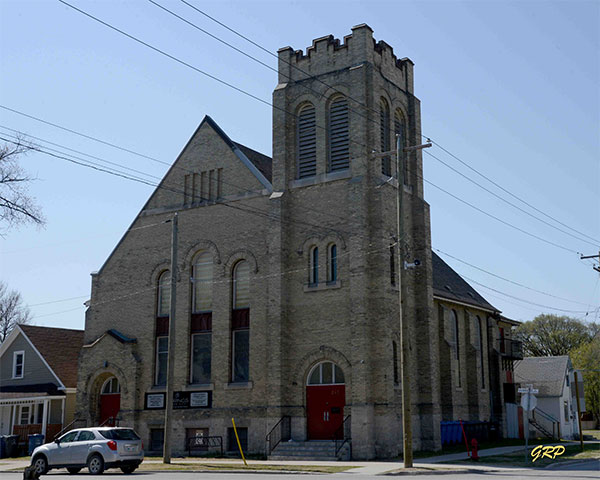
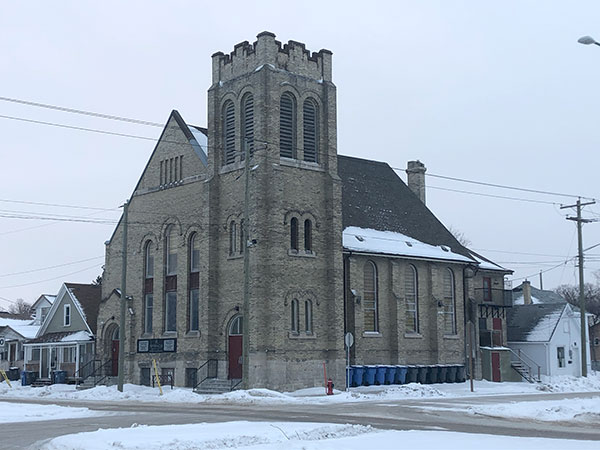
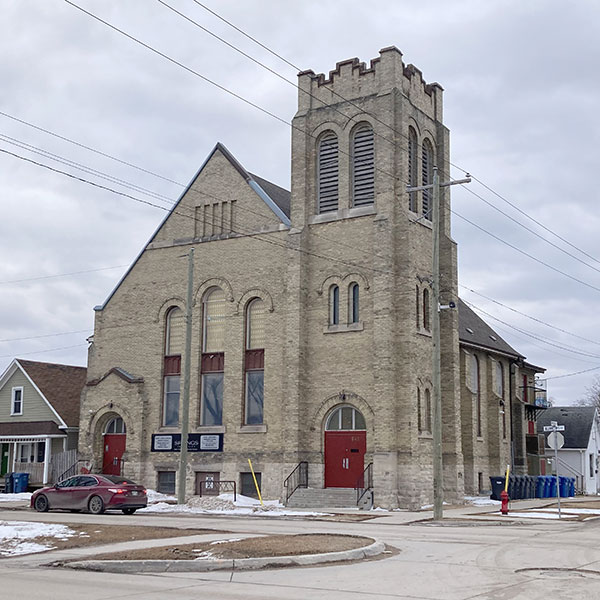
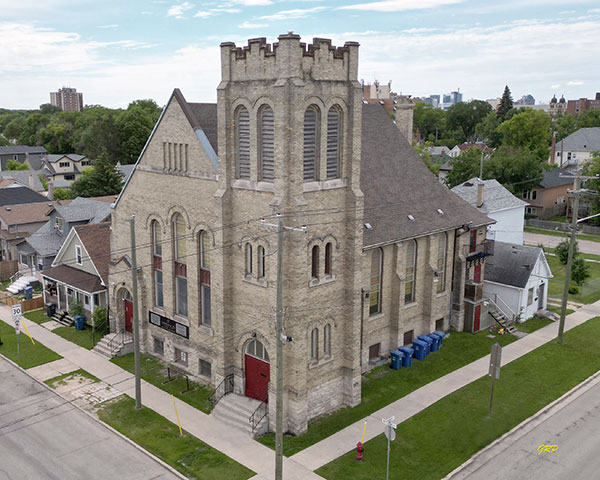
This two-storey brick and Tyndall stone trimmed church at the southeast corner of Burrows Avenue and McKenzie Street in Winnipeg, measuring 50.6 feet by 74.2 feet, was designed by local architect John Hamilton Gordon Russell. It was built in 1911 by the Shepley Construction Company at a cost of about $22,000 for the congregation of Robertson Memorial Presbyterian Church. It replaced the former Dufferin Avenue Presbyterian Church, renamed to commemorate cleric James Robertson.
The structure had a seating capacity for about 900 people was officially dedicated at a service on 19 November 1911. It was associated with the Robertson Memorial Institute Building across the street.
In 1925, following the unification of the Presbyterian, Methodist, and Congregational faiths in Canada, it became Robertson Memorial United Church. It is presently occupied by Springs Church.
Period
Cleric
1914-1917
Heinrich Albert “Henry” Berlis (1876-1954)
1918
George Farquhar (1880-1975)
Robertson Memorial Presbyterian Church (1915)
Source: Winnipeg Tribune, 16 January 1915, page 15.
The former Robertson Memorial Presbyterian Church (May 2015)
Source: George Penner
The former Robertson Memorial Presbyterian Church (January 2021)
Source: Gordon Goldsborough
The former Robertson Memorial Presbyterian Church (March 2021)
Source: Jordan Makichuk
Aerial view of the former Robertson Memorial Presbyterian Church (June 2024)
Source: George PennerSite Coordinates (lat/long): N49.92024, W97.14925
denoted by symbol on the map above
See also:
Memorable Manitobans: John Hamilton Gordon Russell (1863-1946)
Manitoba Business: Mills and Shepley / Shepley Construction Company
Memorable Manitobans: James Robertson (1839-1902)
Historic Sites of Manitoba: Dufferin Avenue Presbyterian Church (607 Dufferin Avenue, Winnipeg)
Historic Sites of Manitoba: Robertson Memorial Institute Building (650 Burrows Avenue, Winnipeg)
City of Winnipeg Building Permit 1442/1911, City of Winnipeg Archives.
“Work starts on church,” Winnipeg Tribune, 31 May 1911, page 5.
“Permits granted yesterday,” Winnipeg Tribune, 31 May 1911, page 8.
“Building permits,” Manitoba Free Press, 1 June 1911, page 11.
“Robertson Memorial Church dedication tomorrow,” Manitoba Free Press, 18 November 1911, page 51.
“Robertson Memorial Church, Winnipeg,” Manitoba Free Press, 18 November 1911, page 51.
“Robertson Memorial Presbyterian Church,” Winnipeg Tribune, 16 January 1915, page 15.
Robertson Memorial United (Presbyterian) Church, 648 Burrows Avenue by Murray Peterson, Peterson Projects, February 2009.
This page was prepared by George Penner, Jordan Makichuk, and Gordon Goldsborough.
Page revised: 3 October 2025
Historic Sites of Manitoba
This is a collection of historic sites in Manitoba compiled by the Manitoba Historical Society. The information is offered for historical interest only.
Browse lists of:
Museums/Archives | Buildings | Monuments | Cemeteries | Locations | OtherInclusion in this collection does not confer special status or protection. Official heritage designation may only come from municipal, provincial, or federal governments. Some sites are on private property and permission to visit must be secured from the owner.
Site information is provided by the Manitoba Historical Society as a free public service only for non-commercial purposes.
Send corrections and additions to this page
to the MHS Webmaster at webmaster@mhs.mb.ca.Help us keep history alive!