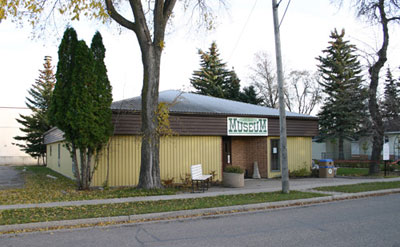
This museum, named for J. A. V.
David, was located in Killarney’s first
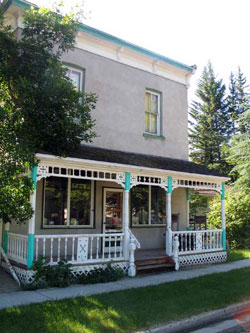
post office. Constructed in 1889 for the postmaster Charles Bate, it
also served as his home and, for the first few years, a store. A large
front room served the post office and a room above it, which was
accessed by an outside staircase—was rented for meetings of the
municipal council and literary society, a music studio, and a Sunday
school. The building also served as the Bate family residence. In the
1950s the building was purchased by the Town of Killarney and the RM of
Turtle Mountain.
A library
was
located on the lower floor beginning in 1958 and a museum
opened on the upper floor in 1960. Later the library moved out and the
museum took over the whole building. In 1967, the name of the museum
was changed from the Lakeland Museum to the J. A. Victor David Museum.
The museum, which is now located on land next to the former museum
building, has a growing collection of period clothing and furniture,
tools, war mementos, cameras, photographs, and archival material. It is
run by a board of directors responsible to the municipal council, which
owns and helps to maintain the building. In deteriorating condition,
the original building was demolished in December 2011.
**
Visit
Historic Sites of Manitoba....
http://www.mhs.mb.ca/docs/sites/javdavidmuseum.shtml

The J.A.V. David Museum
A collection of artifacts from Killarney and area, with displays
focused on home life, the business community, military history, school
items, photo displays, and an extensive display of taxidermy. If you
like history, you’ll love exploring this unique collections of antique
items gathered from many families throughout Killarney and region.
Commercial Life
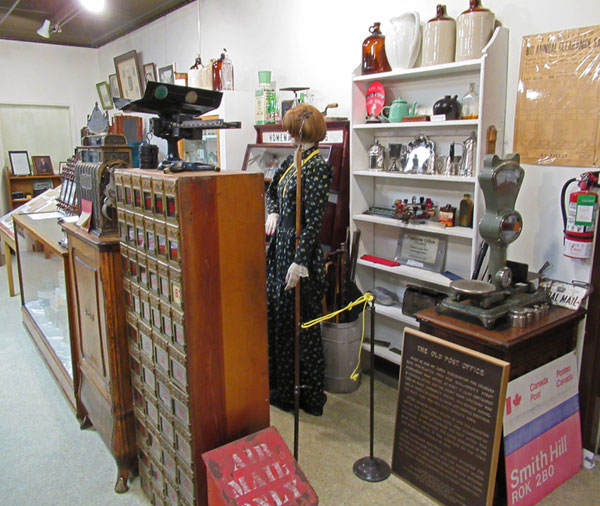
Towns begin with stores. They evolve as service centres for the
surrounding agricultural community. Museum displays take us back, and
offer us a look at what the stores on “Main Street” were like, what
shopping was like.
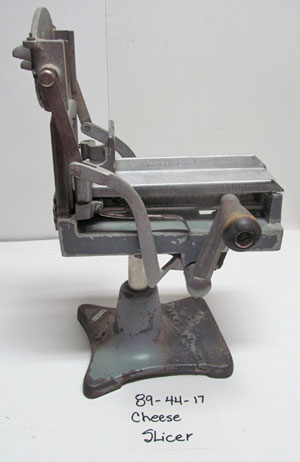
For instance, if you needed cheese, the shopkeeper might use this
cheese slicer to prepare exactly the amount you want.

If you went to Mr. High’s Lumberyard you might get a promotional
yardstick.
The Commercial display is filled with items that take us back to that
shopping experience and remind us how consumer products have changed
over the decades.
The Region
As with most museums the J.A.V. David Museum links the visitor to the
surrounding communities.
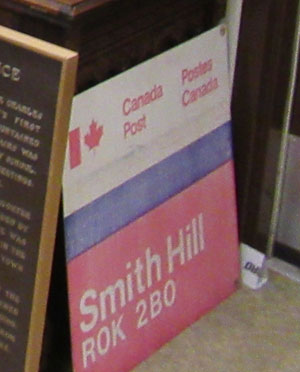
The first Post Office in the region was southeast of Killarney at
…Smith’s Hill. This sign would be from the “second” Smith’s Hill Post
Office created when the railway stop at Enterprise was created on the
branch line between Holmfield and Lena.
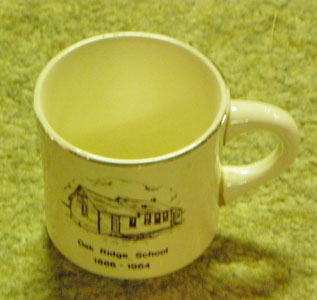
Most rural communities were centred around the one-room school, which
often served as community centre, polling station, and general meeting
place. Oak Ridge, like all of the rural schools, is fondly remembered
by those who attended it. The school sites are often marked by cairns
or signs, but not many have their own commemorative cups!
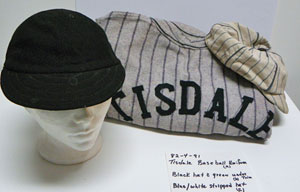
And while the rural neighbourhoods were often represented by sports
teams, not all had uniforms like these. This might offer a hint or
reminder that Tisdale was the place to be until the railway company
changed its mind and took a more southerly route through Killarney.
Home Life
Books and stories can describe all aspects of life in a pioneer home,
but artifacts make all those words and pictures come alive.
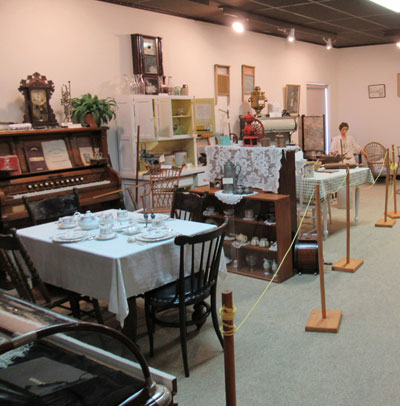
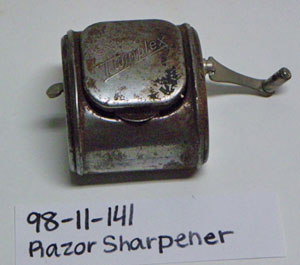
In case you ever wondered how a man kept his razor sharp, in those days
before everything became disposable, the razor sharpener simplified
that task.
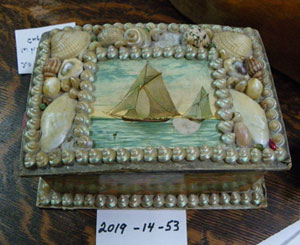
And, just to remind us that, although pioneer homes were very
functional and practical, even modest households might have a few
treasured items like this finely detailed decorative box.
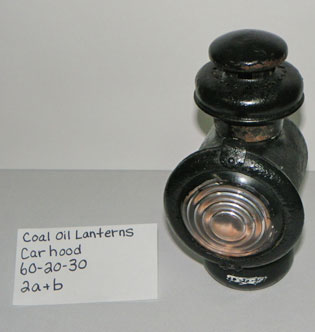
As time marched on, and automobiles became popular, the early ones
might have required this coal oil fired car hood lantern.
Humans have always responded to the visual. From ancient
petroglyphs, cave drawings, paintings, and photography, right through
moving pictures and on to television and holograms.
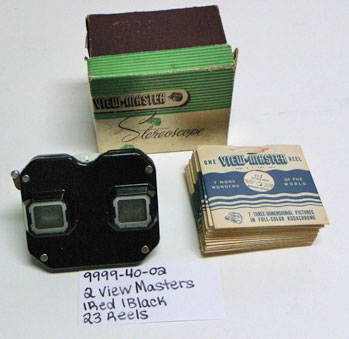
 Photos
were the virtual reality of pioneer times, and to enhance the
experience the View Master was once state of the art.
Photos
were the virtual reality of pioneer times, and to enhance the
experience the View Master was once state of the art.
Farm Life
Agriculture was the root of all commerce, and getting started often
meant working with makeshift, home made, and very simple tools.
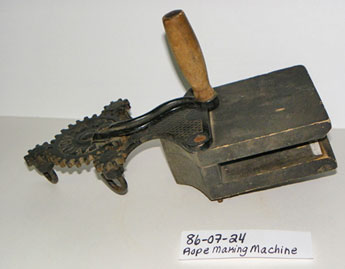
Even rope could be home made with the help of this rope making machine.
As farms became profitable, acquiring a few labour saving devices made
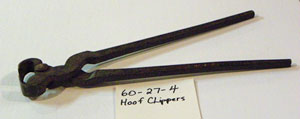
the jobs easier. Some were logical like this hoof clipper,
although most of us might not have given a lot of thought to the care
of these most necessary farm animals.
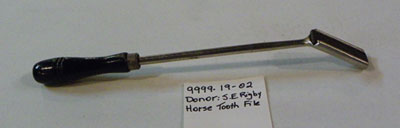
For example…this horse tooth file. Who knew horses required dental care?
Community Identity and History
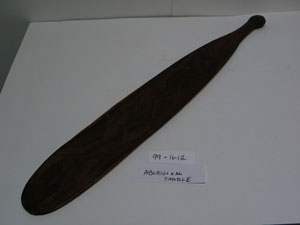
Of course the region had a long and fascinating history before the
first European settlers moved here. Without written and
photographic record we must rely on archaeology and the few artifacts
left behind. This ancient paddle is one such artifact.
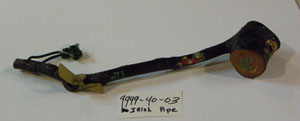
This authentic Irish Pipe is an effective and appropriate reminder of
the Irish heritage of a few of the town’s founders and the Irish roots
of the name, Killarney.
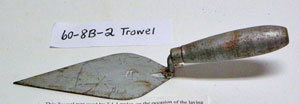
This trowel was used by T.J. Lawlor, Killarney’s first merchant, to lay
the foundation of the “new” school in 1906. It was used again by Mayor
Smaill to plant a “Coronation Tree” in 1937 to mark the beginning of
the reign of George VI.
Recreation
Hunting was essential for the pioneer diet. Preparing your own
ammunition kept the costs down.
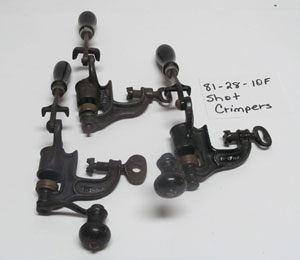
Shot crimpers helped.
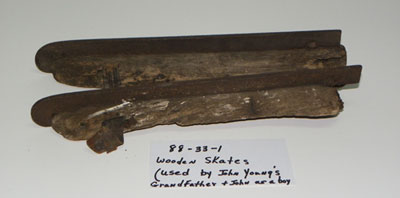
Skating had been popular in both Ontario and in the “Old Country”, and
although there was no shortage of cold weather and ice on the prairies,
they sometimes had to improvise when it came to skates.
School
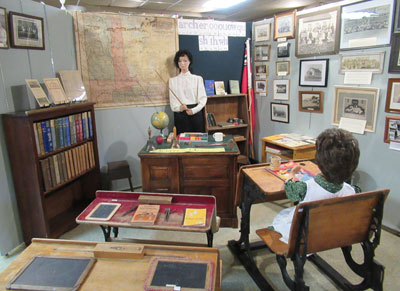
For all of us that did attend a one-room school, the museum’s display
will bring back memories of the hand bell summoning us from the all-too
short recess, the smell of the pencil being honed to a fine point by
the hand cranked sharpener, (I’m sure I’m not the only guy who used
pencil sharpening as an excuse for a stroll) and of course the
ever-present “Fun With Dick and Jane”. Note that while most museum
school displays have a map of Canada (remember the one promoting
chocolate bars?) this one has a rare map of Manitoba. A young person
might wonder what that hole in the top right corner of the desk was
for. I’m not telling.
Military Display
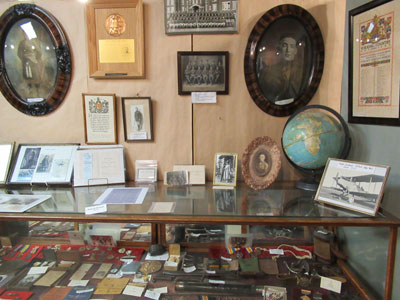
The impact of War was keenly felt in close-knit communities, both in
terms of the sacrifices made by loved ones and the war effort at home.
Items like the Soldier’s Pay Book, personal items and photos, would
have been treasured by the sons and daughters of the soldiers,
especially those who never returned.
The Ration Book display reminds us that the war affected everyone, and
that there was a pride in pulling together and doing what had to be
done.
The Unexpected
The artifacts in Museums need not be totally local in origin. What
people brought to the community also adds to the story. Some things
might prompt some questions as well.
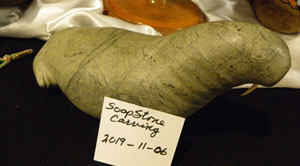
How did this soapstone carving get here?
Taxidermy
A museum’s displays reflect its community, and highlight both what is
typical, common to most rural communities, and also what is unique.
The J.A.V. David Museum has quite fittingly devoted some space to the
careers of two notable citizens. P.C. Edwards, whose long service
as the community’s photographer has left a legacy, as has Charles
Havelock through his work as an educator and taxidermist.
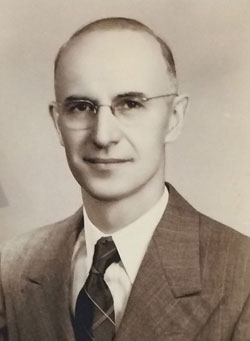
Charles Havelock
Charles William Havelock was the Principal of Killarney School through
the depression years. He founded the Killarney Museum of Natural
History and was a self-taught taxidermist. His extensive
collection became the basis for the later creation of the museum by
Victor David.
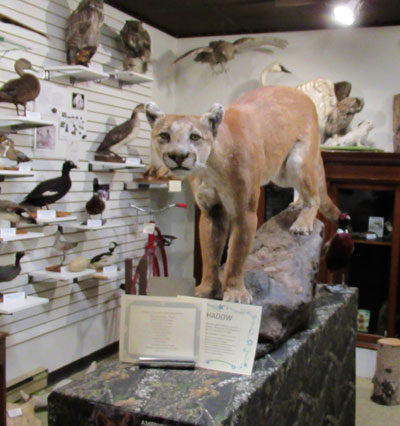
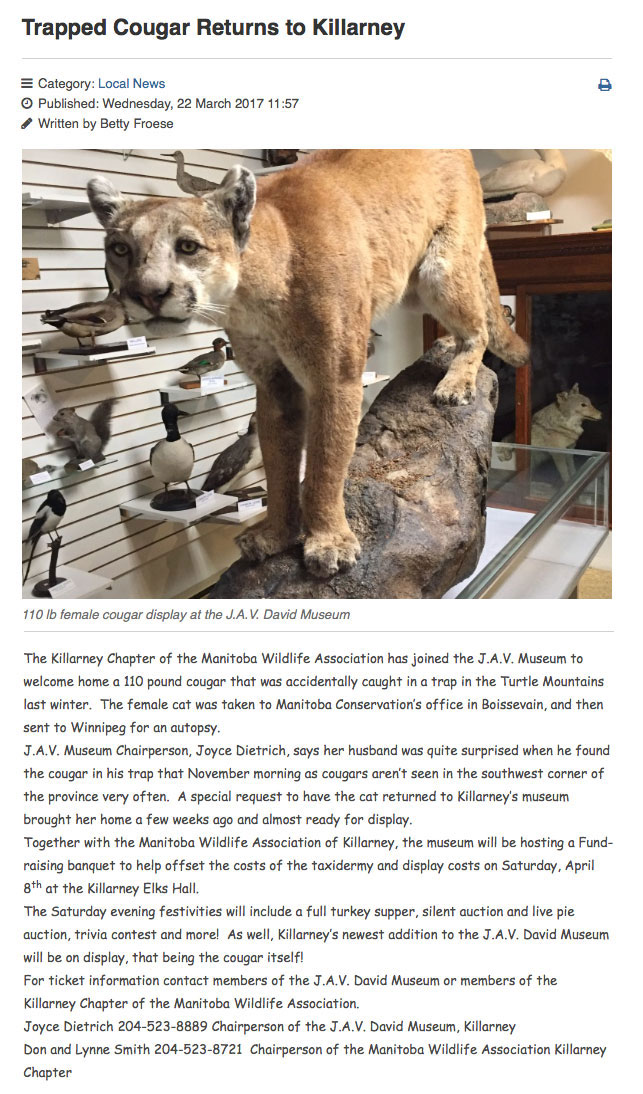
**Note – the cougar is a much later addition, and it comes with it’s
own story.
P.C. Edwards
P.C. Edwards started in photography at an early age in a large studio
in London
. There he became an accomplished photographer and technician
and remembered working on many portraits of Queen Victoria, other
Royalty and heroes of the Boer War.
In 1903 he came to Canada, intending to settle on a homestead in
Saskatchewan, but decided to get off the train in Boissevain. He worked
on a farm and in a tinsmith shop that winter and came to Killarney in
1904 to open a studio with a Mr. Scott. Scott left for the US in 1910
and PC operated the studio until his death.
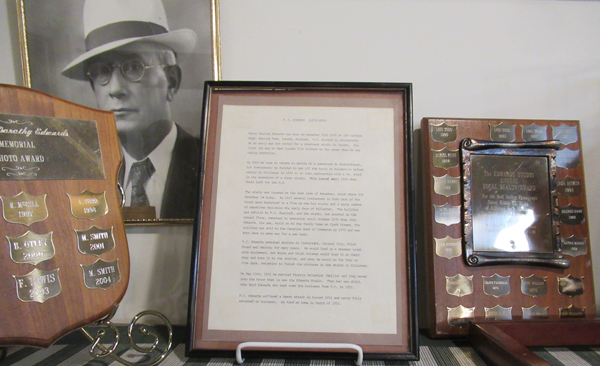
Many of his photos are in the J.A.V. David Museum.
Conclusion
The J.A.V. David Museum is far more than a collection of artifacts and
a repository of archival material. It regularly sponsors and promotes
events that bring the community to the museum and thus bring the museum
to the community.
It uses its very active facebook page to post timely heritage stories
from here and from around the world.
to promote other community attractions such as the Lakeland Regional
Library, to support local business, and to generally keep us informed.
https://www.facebook.com/javdavidmuseumatkillarneymb/
I sponsored the creation of the Killarney Heritage Website and
continues to collaborate with local historians to create new content
and promote research into community history.
http://www.virtualmanitoba.com/killarneyheritage/index.html
For
more resources:
Heritage
Website
Local History
Resources - Sorted by Region
Our Story
JAV DAVID MUSEUM·WEDNESDAY, FEBRUARY 14, 2018
The J.A.V. David Museum is located in Killarney, Manitoba.
History of the Museum
The Bate building was one of Killarney’s most historic buildings. The
property (lot 6 & 7 on Williams Ave.) was bought by Charles Bate
from John Williams for $200.in February 1889. James MacNaughton,
contractor and lumber dealer, was engaged to supply material and
workmanship for the building which was completed in August for
$1,756.94.
Charles Bate was appointed Postmaster in 1883, collecting the mail from
Wakopa to which it had come by courier from Brandon via Deloraine. The
post office on his homestead burned down so he first moved to T.J.
Lawlor’s store and then to a tar-paper shack on Broadway, just north of
the present post office. The new building on Williams Ave. was to be
his home and the front room the postoffice and for a few years a store.
The room above the post office, which where accessed by stairs on the
outside was rented out for council meetings, the literary society, a
music studio, and a Sunday school. Mr. Bate was postmaster until his
death in 1920, when he was succeeded by his daughter Aquila. In the
1950’s, Mrs. A.M. High, Charles Bate daughter, wished the building and
grounds to be used for some community purpose. The property was
purchased jointly by the Town of Killarney and the R.M. of Turtle
Mountain.
The Museum has been in existence since Charles Havelock needed a home
for his Natural History Display in 1958. It was first stored n a lean
to behind the library in the Bate building. Mr. J.AV. David, Mayor of
Killarney at that time, arranged to develop the second floor of the
building as a museum. Much work and initiative was required to make the
rooms suitable, but with the help of many volunteers (notably, W.A.
McKnight, S.E. Rigby, and Alex Cochrane) and many community donations
the Lakeland Museum was opened in 1960. The Centennial Year, 1967, the
museum was renamed the J.A. Victor David Museum in honor of its
founder.
It came as a great relief when the overcrowded museum could spread out
into the lower floor, vacated by the Library. Overcrowding again made
its self felt and a new building was constructed adjacent to the first
building in 1985, with the assistance of federal grants, private
donations as well as generous support from the R.M. of Turtle Mountain
and the Town of Killarney. In 1991 the archives and storage room were
added to the museum.
The property is owned by the Municipality of Killarney-Turtle Mountain,
which contributes the cost of utilities and maintenance and upkeep of
the building. The museum itself is administered by a volunteer board.
Unfortunately in 2009 all artifacts were moved out of the building to
protect them from mold and excessive moisture in the building. The
building was demolished on Dec. 8. 2011.
Emerald Memorial Park was opened Sept. 8, 2014 on the land where the
Bate building stood. Grants from the Killarney Foundation, Agrium,
donations and many volunteer hours, made it possible.
Exhibits
Exhibits include a Pioneer Kitchen & Dining Room, Children’s
Room and General Store and Post Office. There is a large Camera
collection from the Edward’s Studio, Church exhibit and the Charles
Havelock Natural History Exhibit. There is many period clothing and
furniture, books, musical instruments, local paintings and photographs.
In addition we have a large exhibit of personal artifacts from the
Military from this area. Agricultural exhibit and the Gordon
Randall Collection of arrowheads and other pre contact artifacts.
The museum also has a large amount of archival material in the Archives
including maps, photographs, letters, family histories and historical
documents from many local service groups.
Our museum hosts a wide array of artifacts and archives
showcasing the wonderful legacy of this area.
J.A.V. David Museum
414 William Ave
Killarney MB R0K 1G0
Primary Phone: 204-523-7325
Admission: By donation
Regular Hours:
July 2nd- August 28th, Closed on Mondays
10AM - Noon & 1 - 5PM
Off Season Hours:
by appointment, please call 204-523-7325, or 204-523-7325 or
204-523-7369
About the Museum:
The J.A.V. David Museum features Native and Pioneer artifacts, war
relics, photographs, cameras, maps, trophies, textiles, art, and a
restored historic post office.
|